Tag: Maths

Board Game – Maths

LI: To create a maths board game using maths strategy.

In this activity we created a maths board game and used different strategy. Our game is Snakes and Ladders but instead if Snakes and Ladders it uses Arrows and Rulers. The rules that we have set is when going up the ladders you will have to subtract the amount your going up. Eg: 84 – 28 = 56 and that means your going 56 blocks up, When going down you have to subtract the amount of how much your going down. Eg: 94 – 75 = 19 which means your going down 19 blocks. To play this game you will need to use your knowledge of subtraction, algorithm and number knowledge. These strategies will help you beat your opponents and win prizes. Before this game is finished we have to play the game with other people. The challeging bit about this is that not copyrighting other games 

I enjoyed this activity because I created a maths game about different math stratergies.

Order and Position – Maths

LI: To learn to order and position

In this activity we used numbers and coordinates. We used different numbers to place dots and see what was the secret drawing. After a long time of placing dots and connecting the dots I found out that the secret drawing was a helicopter. I didn’t know what it was at first because I had my paper upside down but then my friend told me to turn it around and then it revealed the secret image.

I enjoyed this activity because I learnt how to use number and coordinates to find a secret image.

Stastical Investagation

In this activity we were introduced to stastical investigation. Me and my partner Matheus created a question and asked Do kids in LS2 have pets and if yes What pet/pets do you have. We found out that 8 people have pets and 11 don’t have pets so we found out that more kids in LS2 have no pets. I also found out that most of the students have dogs.

I enjoyed this activity because I used statistics to find out how many students have pets

Exploring Mean, Meadian, Mode and Range

In maths this week we explored Mean, Meadian, Mode and Range. In the picture above it shows Range and what the different heights are in Group 1, 2, 3. There is a range of 20cm between the shortest person and the tallest person. I think this helps to see what the different range and who is the tallest and shortest.

I enjoyed this activity because this will lead to better marks on my maths test.


3D Shapes

LI: To understand and learn the features of a 3D Shapes

In this activity we had to chose 6 objects and find an everyday object. The 6 shapes we used were Syphere, Cylinder, Cube, Hemisphere, Cuboid and Cone. For the Syphere I chose a ball, Cylinder a can, Cube a dice, Hemishpere a bowl, Cuboid a gum packet and Cone an Ice Cream cone or Traffic Cone. An interesting  fact that I found is that a sphere only has 1 face.

I enjoyed this activity because I now have a good understanding of 3D Shapes.

Subtraction Algorithim

LI: To use subtraction Algorithim.

Subtraction is the easiest way to solve a problem with the fastest pace and effincincy. The steps are very easy and if you follow these steps you will get your subtraction questions correct.  

  1. Align the number to the place value column. 
  2. Subtract the ones first ( If you don’t subtract the ones, first the answer will be wrong).
  3. If you can’t subtract, we can take one number from the higher digit and add it to our original to make it 12. 
  4. Then subtract he next digits.

I enjoyed this activity because I showcased how to use subtraction Algorithim.

Addition Algorithim- Maths

LI: To showcase how addition Algorithim is used.

In this activity I showcased how addition Algorithim can be used efficiently. Addition Algorithm is the easiest way to solve a problem. Using algorithms can help solve problems with efficiency, speed and accuracy. The steps are very easy and they are.

  1. Align the number to the place value column 
  2. Add the ones first ( If you don’t add the ones, first the answer will be wrong)
  3. Then if there are any numbers left you carry it over to the next column
  4. Then add all of the nest digits. 

I enjoyed this activity because I showcased how addition Algorithim is used.

Rounding Up Digits

LI: Round numbers up to the millions and two decimal places.

In this activty we rounded up digits to the correct digit. Any digits below 4 goes down and anything above 5 goes up. For example if your number 13200 and you want to round it to the nearest ten thousand. The number goes down to 10000 because that is the closest number to 13200 or if the number is 17200 and you want to round it up to the nearest ten thousand it would 20000 because it is the nearest closest number to 17200.

I enjoyed this activty because I used the rounding up stratergy.

Stastical Investigation

LI: To use Stastical Investagation to find data and information.

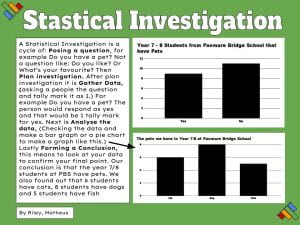
In this activity we found how many year 7 – 8 students at Panmure Bridge School have pets and What kind of pets that the have. A Statistical Investigation is a cycle of: Posing a question, for example Do you have a pet? Not a question like: Do you like? Or What’s your favourite? Then Plan investigation. After plan investigation it is Gather Data, (asking a people the question and tally mark it as 1.) For example Do you have a pet? The person would respond as yes and that would be 1 tally mark for yes. Next is Analyse the data, (Checking the data and make a bar graph or a pie chart to make a graph like this.)

Lastly Forming a Conclusion, this means to look at your data to confirm your final point We found that 11 students do not have and pets 9 students have pets. 6 students have cats, 8 students have dogs and 5 students have fish.

Statistical Investagation

LI: To read the, gather, sort, graph and analyse data

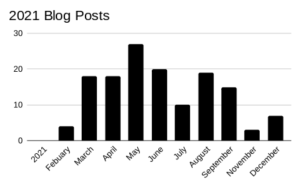
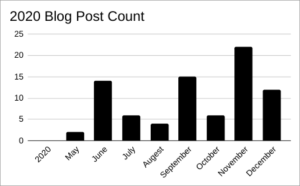
This activity was to find how much blog post you did over the years. For the year 8, we found our blog posts from 2020 to 2023. All together I have 539 blog post. I also figured out that in 2021 I posted 141 blog post, I think in this year I was more dedicated to blog more.